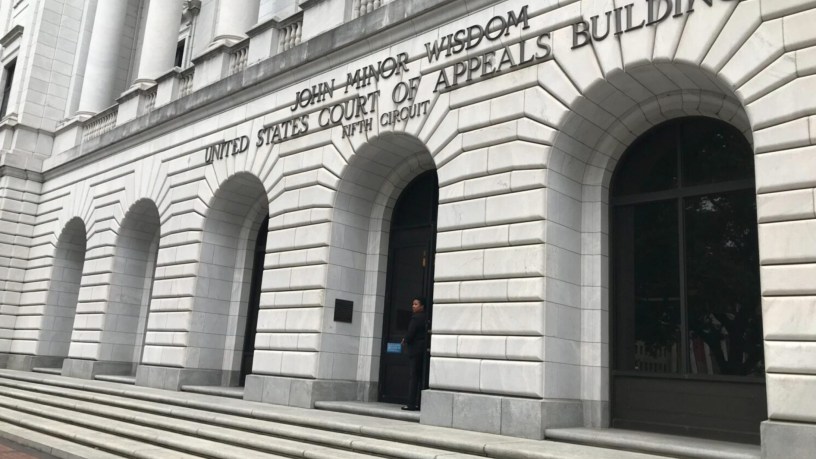
Originally published at Common Dreams
A U.S. federal appellate court on Friday ruled that a Jim Crow-era Mississippi law permanently disenfranchising people with certain felony convictions is unconstitutional.
In a decision that can be appealed to the full U.S. 5th Circuit Court of Appeals, a three-judge panel of the tribunal ruled 2-1 that Section 241 of Mississippi’s 1890 Constitution “violates the Eighth Amendment’s prohibition on cruel and unusual punishment and the 14th Amendment’s guarantee of equal protection under the law.”
Last August, the 5th Circuit affirmed Section 241, with dissenting Judge James E. Graves Jr., a Black Mississippian, lamenting that when his colleagues were “handed an opportunity to right a 130-year-old wrong, the majority instead upholds it.”
The U.S. Supreme Court declined to hear an appeal of the ruling, prompting a scathing dissent from liberal Justice Ketanji Brown Jackson.
“In the last 50 years, a national consensus has emerged among the state legislatures against permanently disenfranchising those who have satisfied their judicially imposed sentences and thus repaid their debts to society,” Friday’s ruling states. “Mississippi stands as an outlier among its sister states, bucking a clear national trend in our nation against permanent disenfranchisement.”
Friday’s ruling is the result of a 2018 lawsuit filed by the Southern Poverty Law Center and ACLU on behalf of plaintiffs including Dennis Hopkins, who has been disenfranchised since 1998 due to a grand larceny conviction.
“In school, they teach our kids that everybody’s vote counts, but no matter how I’ve lived for the past 20 years, I don’t count, not my values or my experience,” Hopkins said when the suit was filed. “I have paid Mississippi what I owe it in full, but I still can’t cast my vote for my children’s future.”
Section 241 “mandates permanent, lifetime disenfranchisement of a person convicted of a crime of any one of ‘murder, rape, bribery, theft, arson, obtaining money or goods under false pretense, perjury, forgery, embezzlement, or bigamy,'” according to the ruling.
As the NAACP Legal Defense Fund (LDF) notes, “Section 241 permanently disenfranchises people convicted of 10 specific crimes, eight of which were chosen by all-white delegates in 1890 and based on their belief that Black people were more likely than white people to be convicted of those crimes.”
There are currently more than 20 crimes that disenfranchise Mississippians from voting. The state—which according to the Sentencing Project is one of only 12 with lifetime disenfranchisement—added 11 more offenses to the ban list in 2005.
In contrast, everyone age 18 and up—including currently incarcerated individuals—has the right to vote in Maine and Vermont.
While Black Mississippians are 36% of Mississippi’s voting-age population, they make up 59% of its disenfranchised people.
“Section 241 is Jim Crow law, which created a deliberate and invidious scheme to disenfranchise Black people,” said LDF assistant counsel Patricia Okonta.
“Today, Black Mississippians continue to be disproportionately harmed by this provision,” Okonta added. “While the state is home to the highest percentage of Black Americans of any state in the country, it has not elected a Black person to statewide office since 1890.”
 Brett Wilkins